
Interceptor drones
Fast enough to catch what it finds.
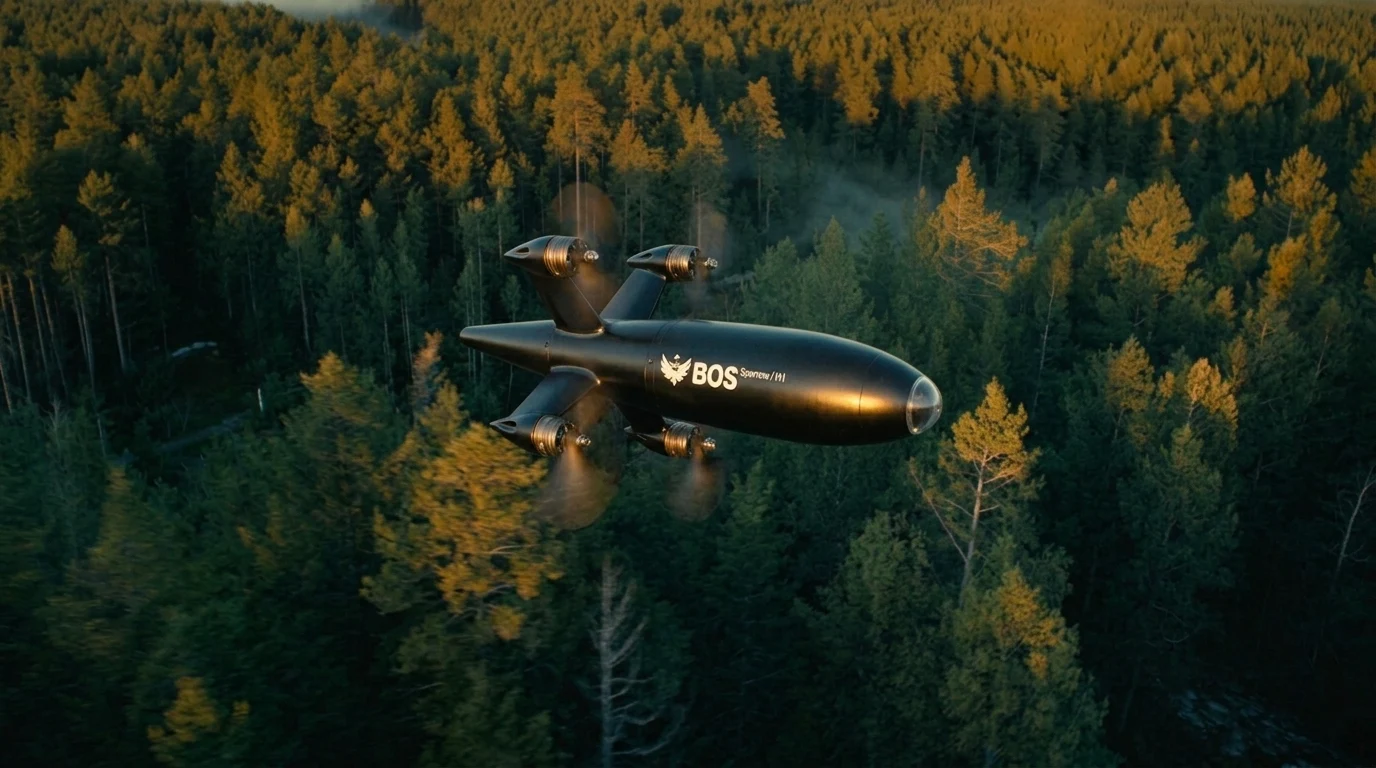
A slender, autonomous interceptor built for speed. It flies at 750+ km/h and identifies its target with visual and thermal cameras and LiDAR before it commits.
Part of one connected stack.
The interceptor works with the radar and the identification layer: the picture is built first, then the drone acts on it.
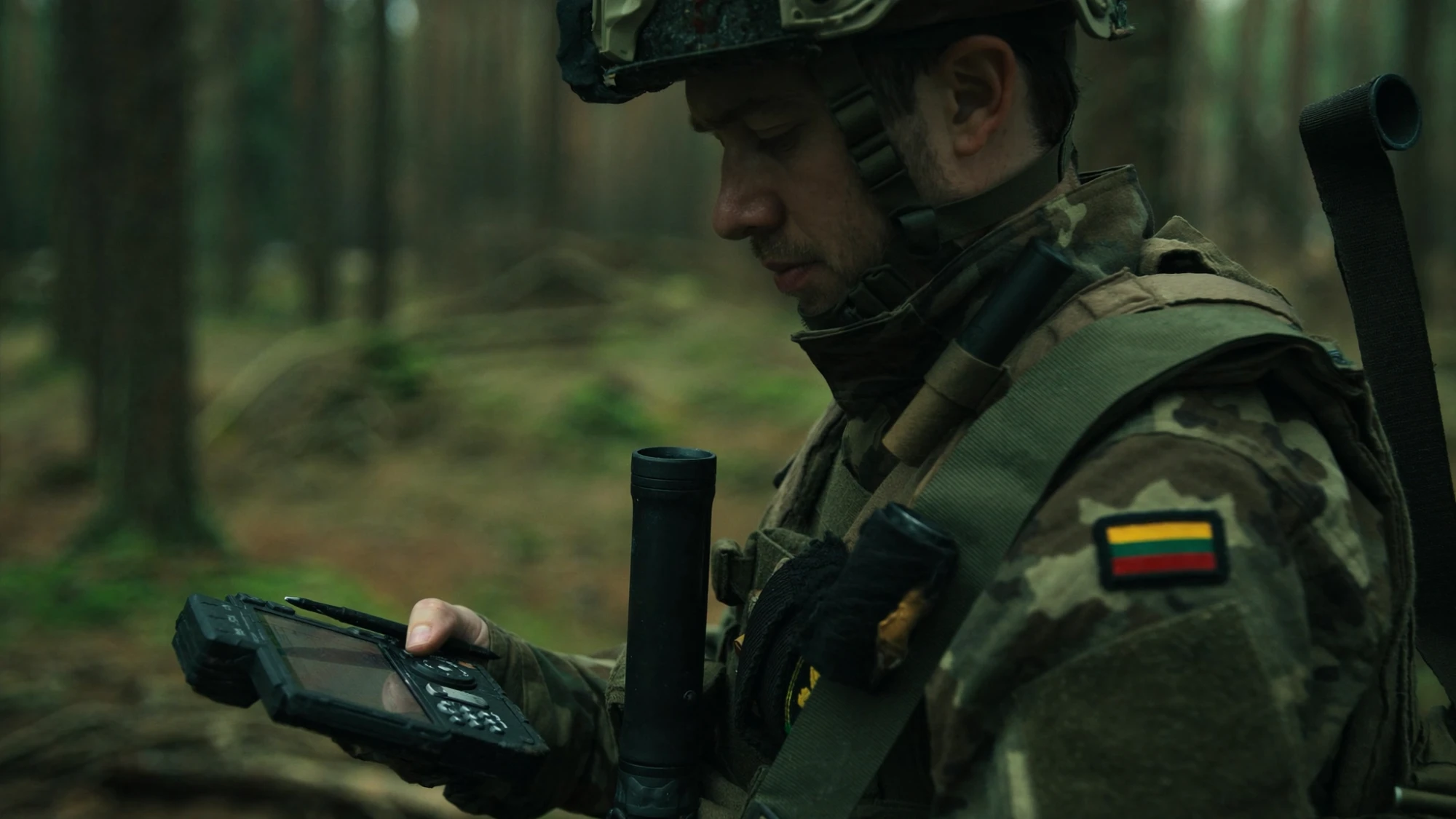
Made for open ground.
Deployed in the field alongside the radar and the microwave array.

- 01
Built for speed
A slim fuselage with an ogive nose and tail, designed for a top speed above 750 km/h.
- 02
Sees what it approaches
A nose sensor window combines a visual camera, a thermal camera and LiDAR to identify the target.
- 03
Four motor pods
Pusher propellers sit on swept pylons behind the airframe, keeping the nose clear for sensing.
- 04
Flight electronics on board
Control and processing live in a dedicated bay in the fuselage, so the drone decides for itself.
- Top speed
- 750+ km/h
- Sensors
- Visual, thermal, LiDAR
- Propulsion
- 4 motor pods, pusher propellers
- Operation
- Autonomous
When a drone is identified and microwave effect is not the right answer, an interceptor launches from a rooftop and closes on it.
Talk to us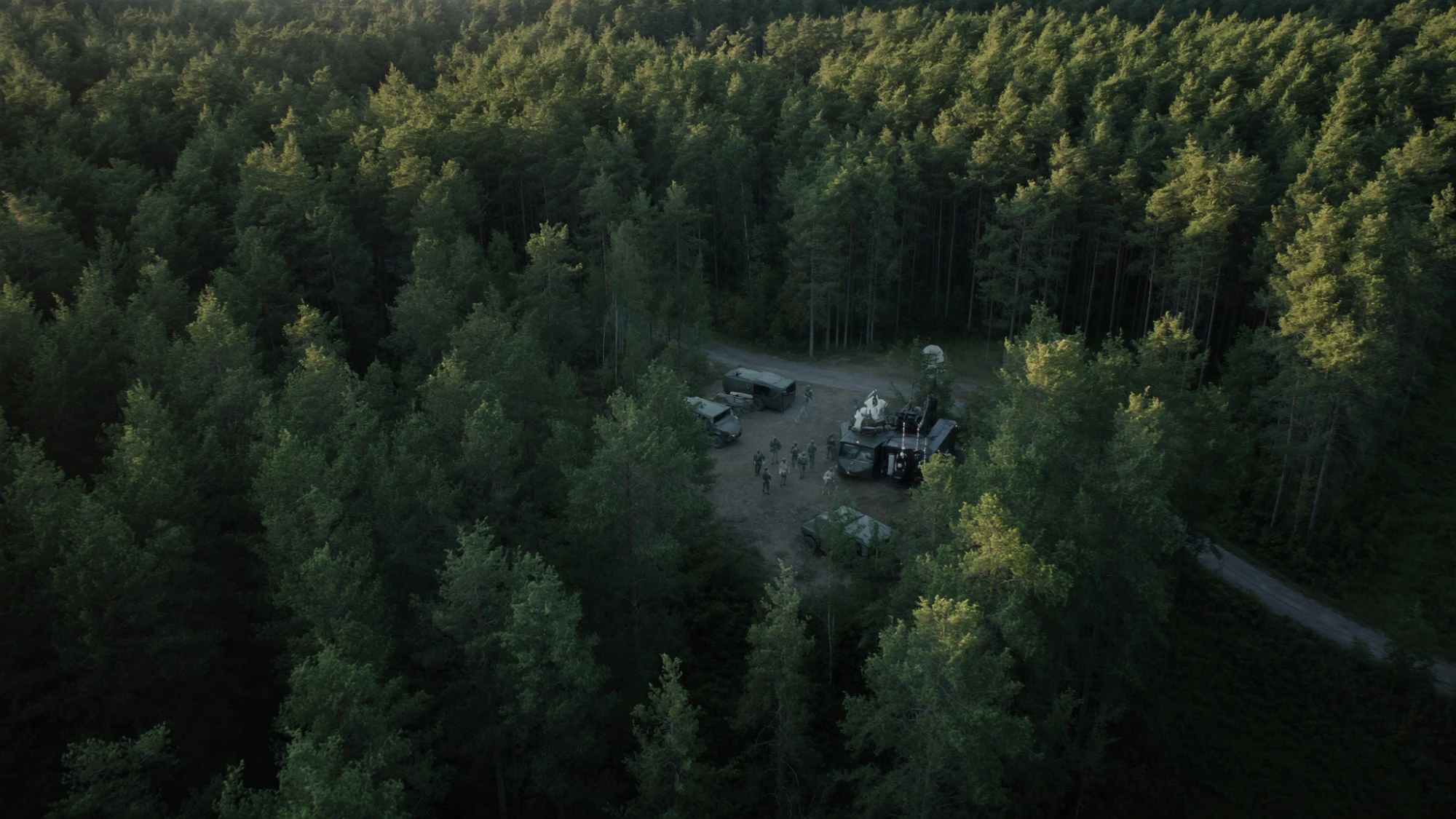
Built to work in the field.
It operates next to the radar and the microwave array it is part of, wherever the airspace needs protecting.